Pronunciation trainer
The Pronunciation Training App is an open-source, web-based application designed to help learners improve their pronunciation in lesser-used languages.
The app is platform-independent and can be accessed from computers, tablets, and smartphones. Currently, it supports two languages: West Frisian, spoken in the Netherlands, and Central Latgalian, spoken in Latvia. However, the application has been designed as a generic tool that can be extended to other languages, provided that recordings of native model speakers are available.
For West Frisian, the app includes recordings from three native speakers representing Clay Frisian and Wood Frisian, covering 46 words and 28 vowel categories. For Central Latgalian, recordings from twelve native speakers are available, covering 91 words and 19 vowel categories.
How it works
Users can select a language, a model speaker, a target vowel, and an assessment level. The app presents words containing the selected vowel and allows users to listen to a native speaker’s pronunciation, record their own pronunciation, and compare the two. Pronunciation accuracy is assessed automatically using an acoustic distance measure based on Mel-frequency cepstral coefficients (MFCCs) and Dynamic Time Warping (DTW). Before comparison, leading and trailing silences are removed, and differences between male and female voices are normalized when necessary. DTW aligns the recordings to account for differences in speaking rate, after which the average acoustic distance between corresponding speech frames is calculated.
The resulting pronunciation accuracy is presented on a five-star scale, providing immediate feedback. Users can choose between strict and lenient assessment levels, allowing the difficulty of the evaluation to be adjusted. They can also listen to their own recordings and compare them with those of the model speaker.
Who is involved
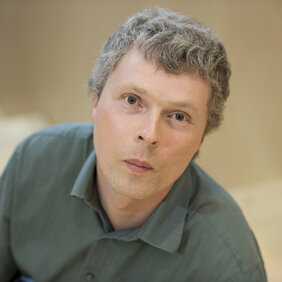
Wilbert Heeringa
Researcher
Wilbert Heeringa is a researcher at the Fryske Akademy, working on dialectometry, phonetics and statistics. He uses computational methods to measure dialect variation and change in vocabulary, morphology and pronunciation, and develops tools for phonetic research such as Visible Sounds.